Enjoy FREE shipping anywhere within the US!

E-Bike Battery Maintenance Guide: Extend Battery Life & Performance

Quick answer

  • Charge with the original charger, avoid regularly draining the pack to zero, and store it around 30% to 60% charge during longer breaks.
  • Charge and store the battery at room temperature when possible, and let a very hot or very cold pack return toward room temperature before charging.
  • Keep contacts clean, check that the battery mounts securely, and replace damaged or swollen batteries instead of trying to open or repair them.

If you want practical e-bike battery maintenance advice rather than a spec-sheet deep dive, start here. This guide focuses on everyday charging, storage, temperature, and inspection habits that help reduce avoidable battery stress and keep your bike ready to ride.

If you are still narrowing down complete-bike options, our e-bike buying tips can help you weigh battery size, motor setup, and overall value before you buy.

Understanding Your E-Bike Battery

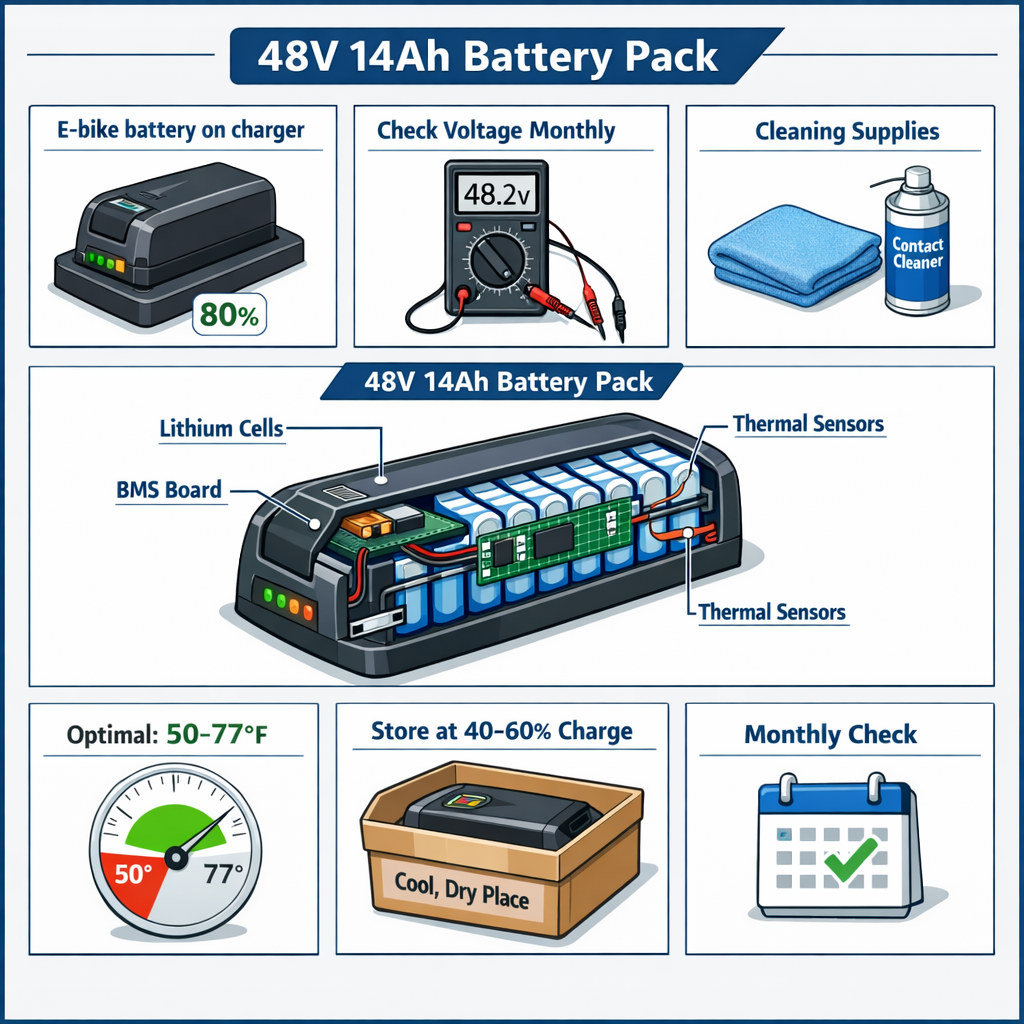
Most modern e-bikes use lithium-ion battery packs managed by a Battery Management System (BMS). That system helps protect the pack from overcharging, over-discharging, and overheating, but good day-to-day habits still matter.

  • Voltage: Commonly 36V, 48V, or 52V depending on the bike system.
  • Amp-hours: Higher amp-hour ratings generally mean more stored energy.
  • Watt-hours: Voltage × amp-hours, which is the clearest capacity number for range comparisons.
  • Cycle life: Capacity gradually declines over time, and the exact pace depends on use, heat exposure, storage habits, and pack design.

Smart Daily Charging Habits

Top Off Instead of Running to Empty

Modern lithium-ion packs do not need full discharge cycles. Bosch recommends avoiding regularly draining the battery to zero, and notes that interrupting the charging process will not damage the battery. Trek also notes that frequent top-offs are normal for modern e-bike batteries. See Bosch battery care guidance and Trek's e-bike battery care article.

Practical takeaway: recharge after regular rides when convenient, instead of waiting until the battery is nearly empty.

Avoid Leaving It Full for Long Storage

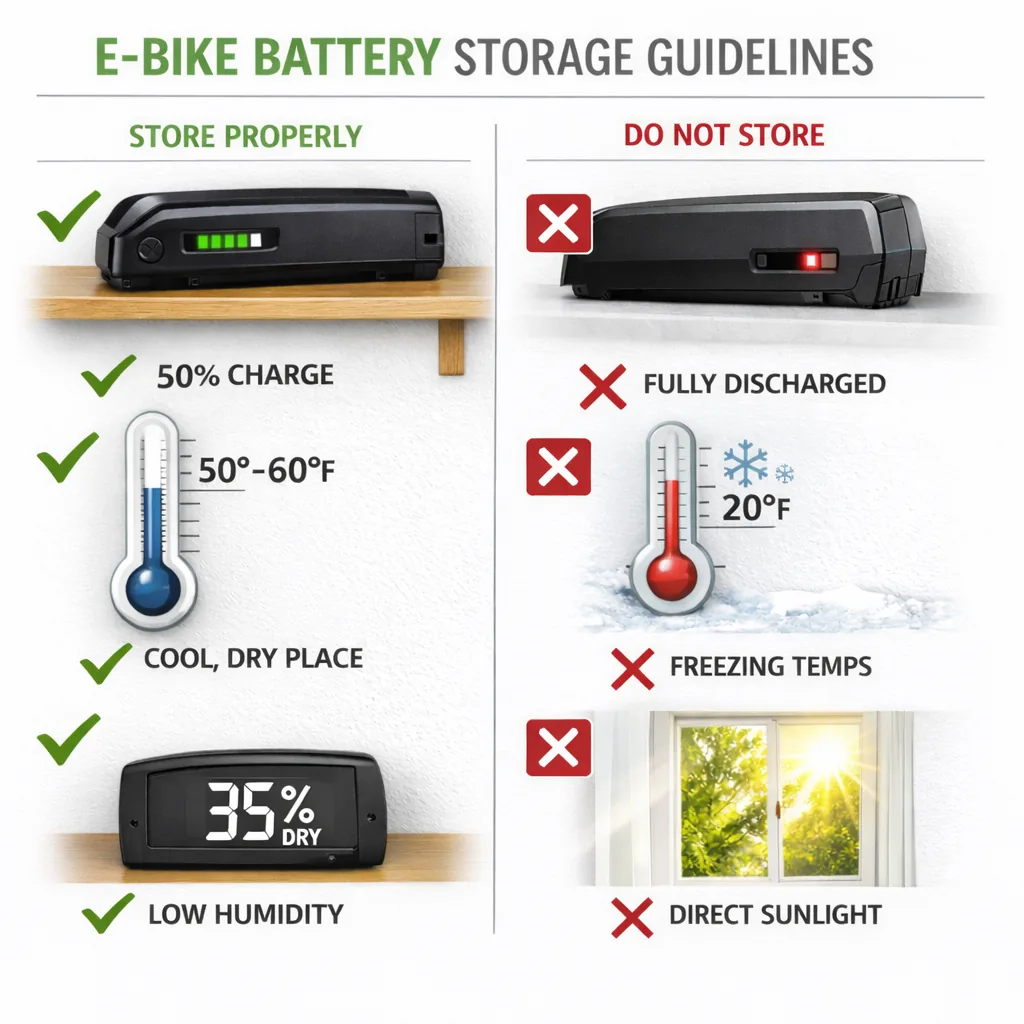
For longer periods off the bike, manufacturer guidance is more useful than old battery folklore. Bosch recommends storing the battery at 30% to 60% charge, and Trek recommends about 40% to 60% if the battery will sit for more than 30 days.

Use the Right Charger

Always use the charger intended for your battery system. Bosch specifically advises using the original charger, and mixing chargers across systems can create charging, safety, or warranty problems.
Battery maintenance guide for e-bikes

Protecting Against Temperature Stress

Temperature has a major effect on charging behavior and short-term performance. Bosch says its batteries only charge between 32°F and 104°F and recommends charging at room temperature when possible. Trek says e-bike batteries perform best around room temperature, roughly 60°F to 80°F, even though short-term cold weather use can still be safe with the right system protections.

  • Avoid charging a freezing-cold pack: bring it indoors first and let it warm toward room temperature.
  • Avoid charging a very hot pack immediately after a hard ride: let it cool before plugging in.
  • Do not leave the battery baking in direct sun or a hot car: excessive heat accelerates battery stress.

Manufacturer references: Bosch battery care and maintenance, Trek e-bike battery care.

Long-Term Storage Best Practices

If you will not ride for a while, storage habits matter more than squeezing in one last full charge.

  • Store the battery partially charged: use the 30% to 60% range Bosch recommends, or roughly 40% to 60% per Trek.
  • Choose a dry, indoor space: room-temperature storage is the safest default.
  • Remove the battery from the bike for longer breaks when practical: this makes temperature control and inspection easier.
  • Keep it away from flammable materials: Bosch recommends storing the battery away from combustible objects and in a room with a working smoke detector.

If the bike has to live outdoors, follow our guide to storing an e-bike outside so weather, moisture, and theft risks do not undo good battery care habits.

Physical Battery Care

Keep Contacts and Mounting Points Clean

Bosch recommends occasional cleaning of the plug poles and keeping the mount area clean so moisture can drain and contacts can dry properly.

  • Inspect contacts for dirt or corrosion.
  • Wipe the area with a dry or lightly damp cloth as directed by your manufacturer.
  • Make sure the battery locks in securely before every ride.

Do Not Open or Repair the Pack Yourself

If the case is cracked, swollen, or otherwise damaged, stop using the battery and follow the manufacturer or dealer replacement path. Bosch explicitly warns against opening or repairing the battery housing.

  • Avoid impacts: drops and hard strikes can damage cells internally even when the outer shell looks mostly normal.
  • Watch for swelling or cracks: these are stop-use warning signs, not cosmetic issues.
  • Skip pressure washing: Trek warns against power-washing e-bikes because high pressure can force water into sensitive components.

Recognizing Normal Aging vs. Trouble Signs

All lithium-ion batteries gradually lose capacity over time, even when they are not in use. What matters is spotting the difference between normal aging and signs that call for service.

Common signs of normal aging:

  • Gradually shorter range compared with the bike's earlier performance.
  • Slightly longer charging times as the pack ages.

Signs you should stop and inspect further:

  • Sudden or dramatic loss of range.
  • The battery will not hold charge or drains unusually fast while idle.
  • Visible swelling, cracks, or case damage.
  • Unusual heat during charging or riding.
  • Persistent battery or BMS error codes on the display.

References: Bosch battery care and maintenance, Trek e-bike battery care.

When to Replace Your Battery

There is no single universal replacement date for every e-bike battery. Replacement depends on how the pack was used, how often it was charged, how much heat it saw, and whether the battery still fits your real-world riding needs.

  • Replace the battery if it no longer gives you enough dependable range for your normal rides.
  • Replace it if the case is damaged, swollen, or the pack develops persistent charging or system faults.
  • If you are unsure, ask your bike brand or local e-bike service shop to inspect the battery before continuing to use it.

If replacement math starts looking better than keeping an older bike on the road, compare current value-focused options in our best electric bikes under $2,000 roundup.

Final Thoughts

Good e-bike battery maintenance comes down to consistent basics: use the correct charger, avoid extreme temperatures, store the battery partially charged during long breaks, and stop using damaged packs immediately.

If you build those habits into your routine, you'll give your battery the best chance of delivering reliable range, safer operation, and better long-term value.

* We may earn a commission when you buy through our links


Related Articles

Warranty Protection

Have a problem? Bike repairs and replacement parts are covered through our manufacturer warranty for up to two years after purchase.

Verified Secure Checkout

Your information is kept 100% protected and private. Payments are handled through trusted third-party providers and never stored on our servers.
Copyright © 2026 Motorized Bicycle HQ. All rights reserved.
linkedin facebook pinterest youtube rss twitter instagram facebook-blank rss-blank linkedin-blank pinterest youtube twitter instagram